hanbing global
Keywords:
Server memory module supplier
DDR5 RDIMM OEM ODM
Server memory procurement guide
Memory module compatibility testing
DRAM traceability
Server DRAM supply chainWhy Server Memory Requires More Than Capacity and Price?
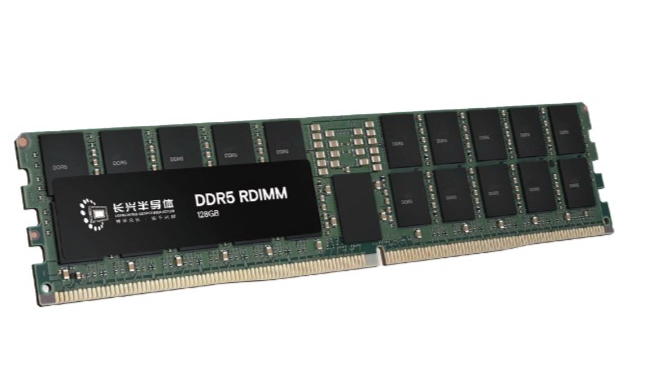
Server-grade memory modules operate under sustained, high-density workloads. A compatibility, thermal, or data-integrity issue can affect entire systems, delivery schedules, and customer confidence—not just a single DIMM. For DDR5 RDIMMs, LRDIMMs, and other server modules, the right OEM/ODM partner must combine DRAM sourcing, module design, validation, and volume-manufacturing capability.
DDR5 delivers higher bandwidth and density than previous generations, while integrating the PMIC on the module and improving temperature monitoring and power management. This raises the bar for a supplier’s design, component sourcing, and test capabilities.semiconductor.
Key Criteria for Selecting a Server Memory Supplier
| Selection Area | What Buyers Should Verify |
|---|---|
| DRAM sourcing | Original-brand DRAM, traceable wafer/die batches, authorization or supply documentation |
| Product portfolio | DDR5 RDIMM, LRDIMM, ECC UDIMM, CUDIMM, and other server-relevant form factors |
| Platform compatibility | Validation on major Intel and AMD server platforms; alignment with server OEM QVL requirements |
| Critical components | Qualified and traceable RCD, PMIC, SPD Hub, and temperature-sensor solutions |
| Testing capability | 100% module testing, burn-in, signal-integrity, thermal, and stress testing |
| Quality system | ISO 9001 or equivalent systems, batch traceability, failure analysis, and RMA process |
| Supply continuity | Stable access to DRAM, PMICs, RCDs, and other long-lead components |
| Customization | Capacity, speed, rank, height, labeling, SPD/firmware configuration, and packaging options |
| Support and warranty | Clear warranty terms, technical support, failure analysis, and replacement strategy |
A DDR5 RDIMM typically relies on a chipset including an RCD, PMIC, SPD Hub, and temperature sensors. The SPD Hub stores module characteristics, configuration, timing parameters, and supported operating modes, while temperature sensors support cooling and operating-condition management.
Recommended Supplier Evaluation Process
- Define platform requirements: Confirm CPU platform, slot type, supported speed, maximum capacity, rank configuration, and RDIMM/LRDIMM requirements.
- Request complete datasheets: Review DRAM vendor, module height, operating temperature, voltage, ECC, SPD configuration, and key component part numbers.
- Require compatibility evidence: Prioritize modules validated on the target server platform or listed on the OEM QVL. Matching capacity and speed alone does not guarantee qualification; rank, die, or manufacturer differences can still cause failures.
- Run sample validation: Conduct boot compatibility, bandwidth, stress, high/low-temperature, and long-duration stability testing.
- Audit manufacturing and traceability: Confirm SMT, testing, burn-in, packaging, batch-number control, and defect traceability.
- Evaluate total cost of ownership: Include unit price, yield, RMA rate, lead time, technical support, and supply-disruption risk—not purchase price alone.
Procurement Recommendation
For AI servers, virtualization, databases, and cloud infrastructure, prioritize OEM/ODM suppliers with original-brand DRAM access, complete test reports, platform-validation experience, and proven volume-production capability. JEDEC memory-module standards cover RDIMM, LRDIMM, UDIMM, and other module types, so buyers should require suppliers to identify the exact standard and module type their products comply with.
Our factory’s DDR production line is fully equipped to meet customer requirements for OEM/ODM orders, with product capacities ranging from 8GB to 128GB. We utilize authentic, original-manufacturer DRAM chips from Samsung, SK Hynix, Micron, and CXMT .

Procurement Director FAQ
Q1: How should buyers choose among original memory, branded modules, and ODM-customized modules?
A:
Original manufacturer memory suits mission-critical systems requiring the highest compatibility, warranty, and long-term supply assurance.
Branded modules suit buyers seeking mature products, stable channels, and moderate customization.
ODM/OEM modules suit buyers with defined platform requirements, volume purchasing, cost-optimization goals, or special specifications—but require rigorous audits of DRAM sourcing, test reports, quality systems, and after-sales support.
For AI servers, databases, virtualization, and core business systems, platform-validation evidence and batch traceability should be non-negotiable requirements.
Q2: How can buyers verify DRAM quality and authenticity?
A: Request the following from suppliers:
DRAM brand, part number, batch number, and date code
Manufacturer authorization, channel documentation, or traceable purchasing records
DRAM-to-module matching and validation reports
Written confirmation that no refurbished, remarked, mixed-batch, or unknown-source DRAM is used
Retained samples and defect-traceability procedures
Server-grade modules should use original-brand DRAM or fully traceable authorized-channel DRAM. Major DRAM makers such as Micron test both components and modules to mission-critical server standards, providing a useful quality benchmark for procurement teams.
Q3: Why can memory still fail compatibility even when capacity, speed, and rank match?
A: Server memory compatibility also depends on:
CPU memory controller and BIOS version
RDIMM/LRDIMM type and rank configuration
DRAM vendor, die revision, and packaging
RCD, PMIC, SPD Hub, and temperature-sensor design
Module height, PCB layout, power integrity, and signal integrity
Server OEM QVL qualification status
Buyers should require real-world test reports for the target platform and complete sample validation before volume production. In DDR5 RDIMMs, the RCD, PMIC, SPD Hub, and temperature sensors jointly determine configuration, power delivery, monitoring, and compatibility behavior.
Q4: What testing capabilities must an ODM supplier have?
A: At minimum, confirm:
100% functional and parameter testing
Burn-in and high/low-temperature testing
Memory bandwidth, stress, and stability testing
Signal-integrity and power-integrity testing
SPD data verification and firmware/configuration control
Batch reliability sampling and failure-analysis capability
Suppliers offering only visual inspection or basic boot testing are not suitable for critical server projects.
Q5: How should procurement leaders assess delivery risk?
A: Evaluate five areas:
Upstream material risk: Availability and safety stock for DRAM, PMICs, RCDs, and SPD Hubs.
Capacity and lead time: Monthly capacity, production scheduling, urgent-order response, and on-time delivery history.
Lifecycle management: EOL notices, PCN management, alternate components, and long-term supply commitments.
Geopolitical and logistics risk: Manufacturing location, export compliance, shipping options, and buffer-stock strategy.
Financial stability: Payment terms, capacity-expansion capability, and ongoing R&D investment.
AI memory demand, hyperscale allocation, and general-purpose server demand can intensify RDIMM supply constraints, making early commitment to critical materials and delivery windows more important.
Q6: Which specifications should be written into a custom-memory procurement contract?
A: Specify:
DRAM brand, part number, batch rules, and a prohibition on refurbished memory
Module type, capacity, speed, rank, voltage, and ECC configuration
PCB layer count, module height, gold-finger plating, and operating temperature
RCD, PMIC, SPD Hub, and temperature-sensor part numbers or approved-vendor scope
SPD configuration, labeling, barcode, packaging, and ESD requirements
Test items, sampling plan, AQL, burn-in duration, and shipment-report format
Warranty, RMA turnaround, failure-analysis responsibility, and replacement strategy
Lead time, safety stock, MOQ, and price-validity period
Q7: Beyond unit price, what should buyers negotiate?
A: Use total cost of ownership (TCO), including:
Yield and incoming-defect rate
RMA rate, repair turnaround, and logistics cost
Hidden costs from downtime, replacement, and project delays
Technical-support responsiveness
Inventory cost caused by lead-time volatility
Long-term supply and product-transition risk
A slightly higher-priced supplier with stable compatibility and fast after-sales support often delivers better procurement value than a low-cost supplier with high return rates.
Q8: How can companies build a practical supplier-scorecard?
A: Use a weighted framework such as:
| Evaluation Area | Suggested Weight | Key Focus |
|---|---|---|
| DRAM and material traceability | 20% | Original-channel sourcing, batch traceability, no refurbished DRAM |
| Platform compatibility and validation | 20% | Intel/AMD testing, QVL alignment, real test reports |
| Quality system and testing | 20% | ISO systems, 100% testing, burn-in, failure analysis |
| Supply chain and delivery | 15% | Capacity, lead time, safety stock, EOL management |
| Customization and engineering support | 10% | SPD, labeling, mechanical design, firmware, rapid sampling |
| Cost and commercial terms | 10% | Unit price, payment terms, MOQ, price stability |
| After-sales and RMA | 5% | Warranty, response time, failure-analysis capability |
For first-time suppliers, conduct an on-site or remote audit and complete at least two rounds of sample validation before mass production.
sales@hanbingglobal.com


Leave a Reply